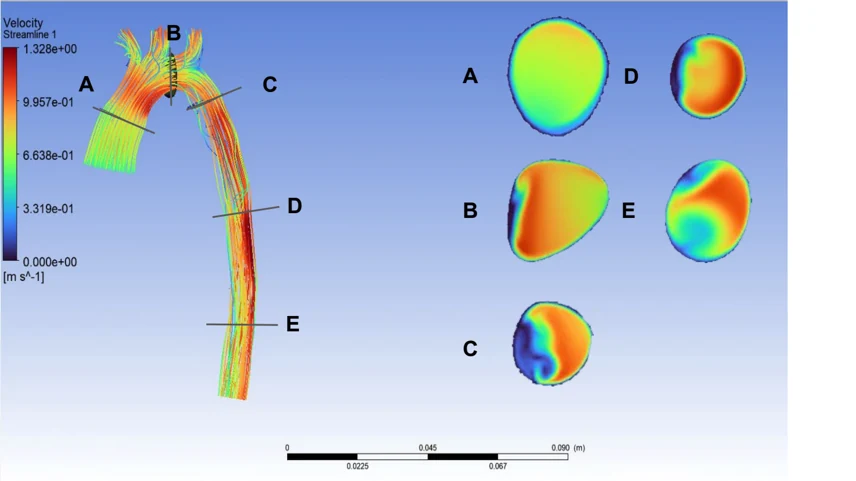
Cardiovascular CFD
Patient-specific aortic hemodynamics
Using three-dimensional vessel geometries and fluid-flow simulations to explore local velocity fields, flow structures, and vascular disease.
We use computational fluid dynamics and transport phenomena to investigate challenging problems in cardiovascular systems, industrial processes, and materials engineering.
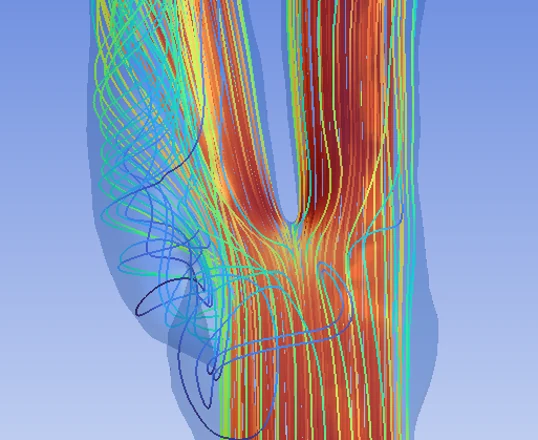
We connect fundamental transport physics with computational models of complex real-world systems.
Using three-dimensional vessel geometries and fluid-flow simulations to explore local velocity fields, flow structures, and vascular disease.
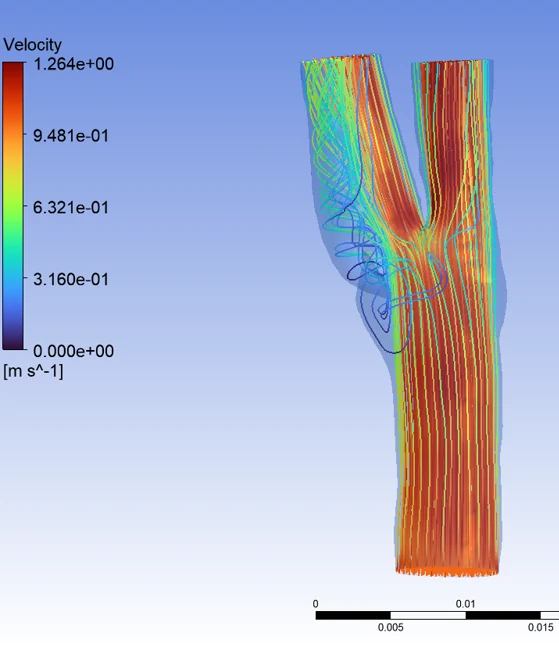
Studying how vascular geometry influences flow behavior and the structures that emerge near branching regions.
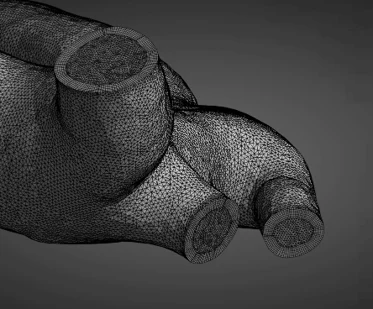
Building accurate computational domains and meshes from complex geometries.
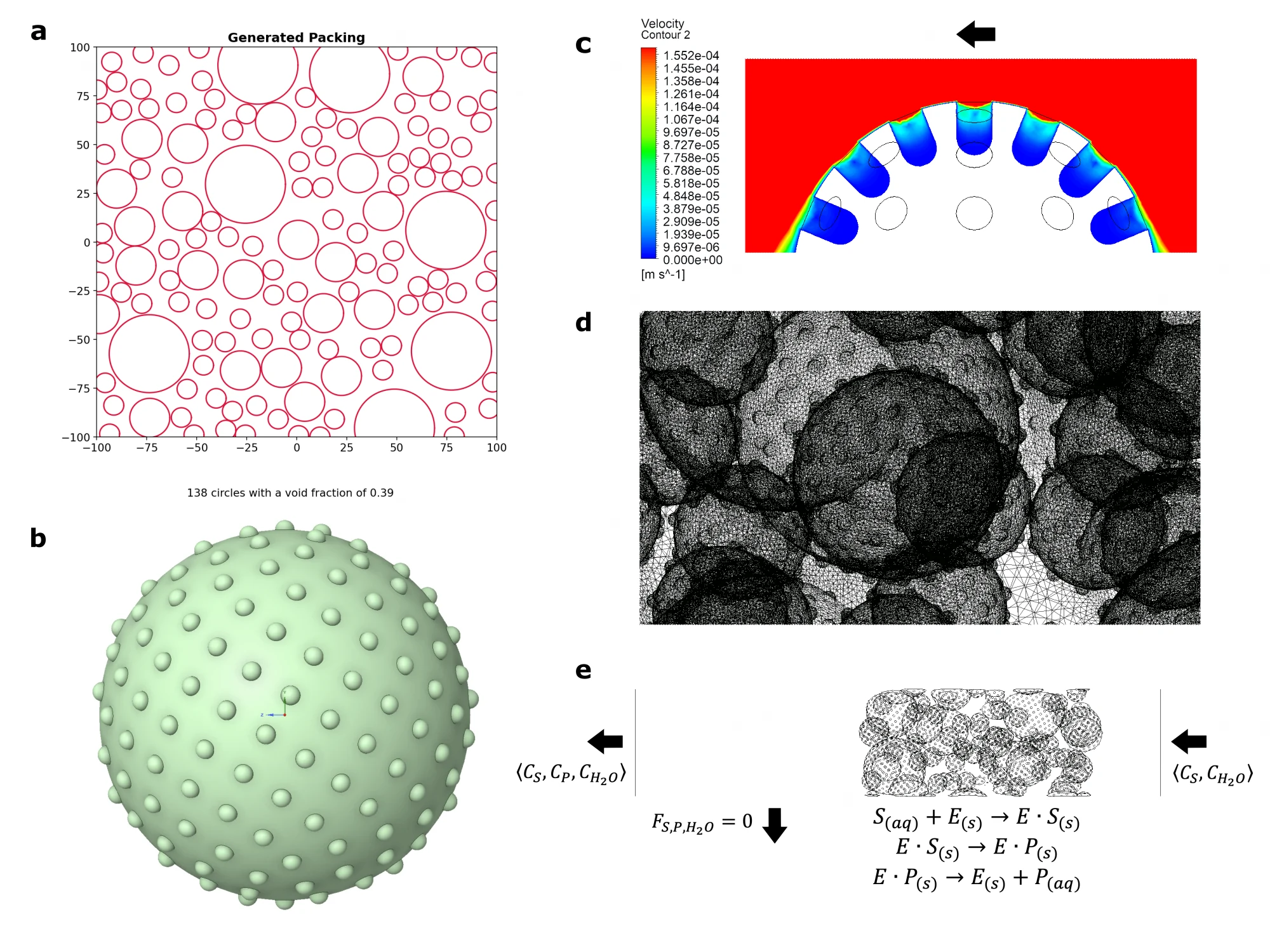
Exploring flow and transport through packed and porous structures.
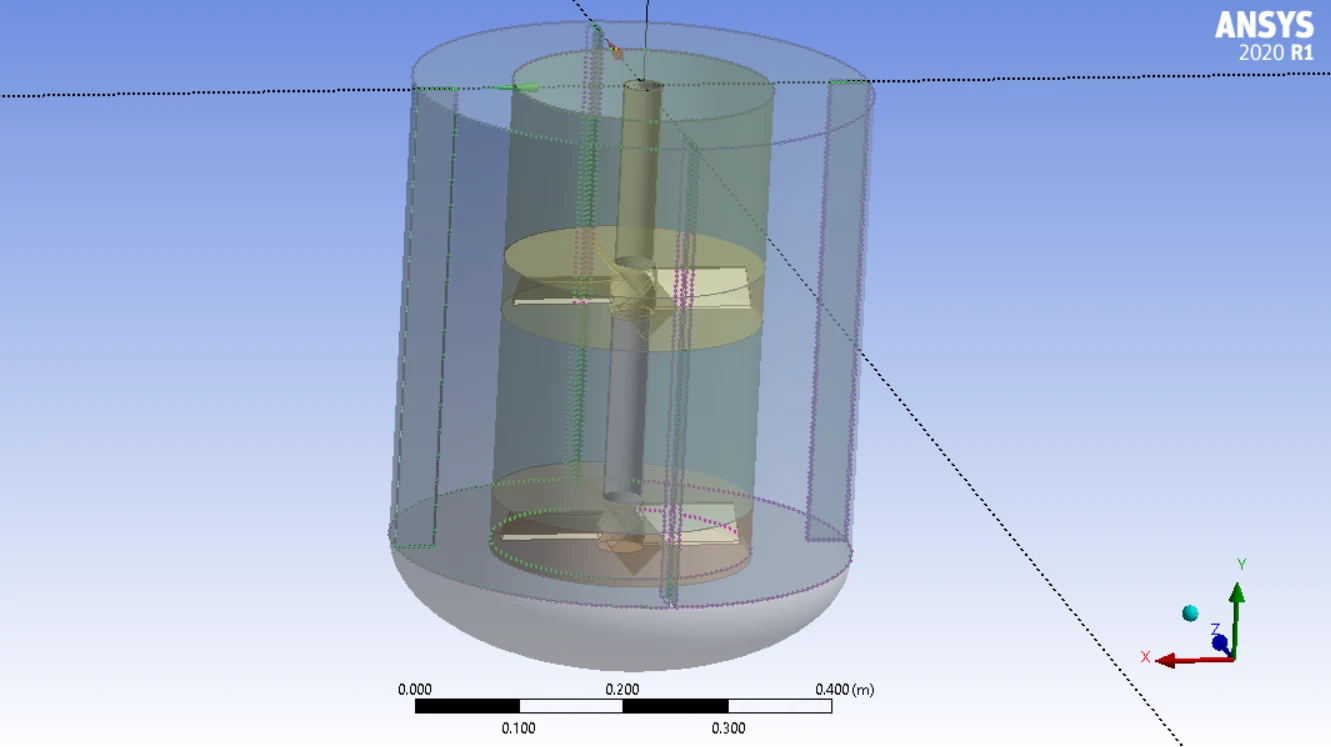
Using numerical models to investigate fluid motion in equipment and processes.
Our projects provide opportunities to work across geometry construction, meshing, numerical modeling, interpretation, and communication of computational results.
Meet the groupCourses taught at Rochester include:
Professor Foster is a coauthor of Fundamentals of Momentum, Heat and Mass Transfer. Work on the eighth edition is underway.
Ansari, Gandhi, Foster & White, “Iterative Symbolic Regression for Learning Transport Equations,” AIChE Journal (2022).
Read publication ↗Explore selected papers, conference presentations, patents and textbook information on our publications page.
We welcome conversations with prospective student researchers and scientific or industrial collaborators.